Social Justice as Nervous System Care: Positively Impacting Thousands of Bodies at Once
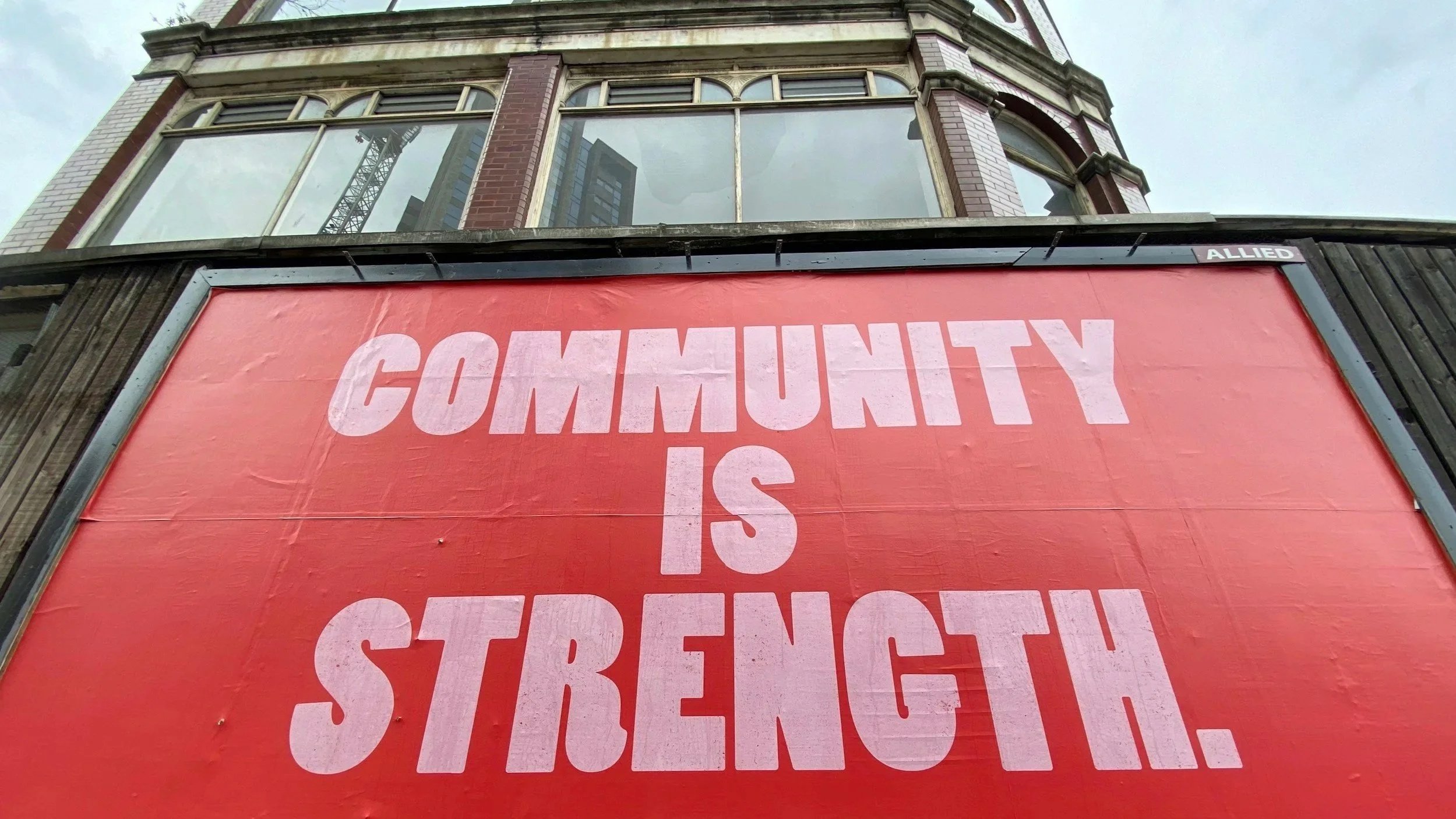
So often mainstream wellness separates nervous system care from the social justice world, at times even suggesting they are counter to one another. We’ve all heard the haphazardly whittled down stereotype of “angry mobs” and large scale dysregulation because we’re paying “too much” attention. But what if your anxiety isn’t the real problem, and instead it’s a rent problem, a safety problem, a healthcare problem? This is a nervous system responding to unsafe conditions exactly as it’s meant to. Social justice isn’t separate from nervous system care, but is its upstream source. Let’s unpack this.
The Well Branded Lie
There’s a version of nervous system care that has become the default language in mainstream circles. It arrives as professional advice ($$$), as an app, a product, or a posture. Breeeeathe, buy the latest vagal nerve stimulator, curate the people around you, shift your mindset, manage your triggers, and poof! The dysregulation lifts. It’s a heavy handed take offered generously, and meant kindly. It is also, at scale, a quiet (though to many screaming) lie. Not because the physiology is wrong, but because the framing relocates a collective problem into the bodies of those most systemically impacted.
The physiology itself is more honest than the advice industry that “borrowed” it (stole, appropriated, and capitalized on it). Your autonomic nervous system is not a private possession you optimize in isolation. To a startling degree, it’s authored by your conditions. Whether you can make rent this month. Whether the people with guns are a protection or a threat. Whether you can leave an unsafe marriage, your job, relocate to another country. Whether your body reads as safe when you walk into a store. These are not inputs a “mindfully trained” person can process into calm. They are the water the nervous system swims in, and they shape…well, everything. Resting heart rate, sleep, vigilance, and the baseline hum of threat, whether or not anyone has done the “inner work.”
This is the part the mainstream wellness frame cannot absorb or flat out refuses to acknowledge — a body under chronic threat isn’t a body failing at self care. It’s a body responding accurately to unsafe conditions. The clenched jaw, the gnawing headache…these aren’t symptoms of a malfunction or something you need to step to the plate to more skillfully, but evidence of your body doing its job under impossible input. To call that a frequency problem is to blame the smoke alarm for the fire.
The Upstream is Structural
If the threat load is structural, then the upstream intervention has to be structural, too. It is not a breathing app. It’s housing, income, healthcare, and an end to the violence — economic, interpersonal, state, and worldwide— that keeps whole populations in survival mode.
This is worth stating plainly, because it sounds like a category error until you follow the physiology. When a neighborhood finally gets clean water, when a family’s medical debt is erased, when immigrant families can safely live in our communities, when a trans person can access care without being interrogated or humiliated, these are nervous system interventions. They don’t teach anyone to regulate. They lower the resting threat that regulation was being asked to override. Which positively impacts thousands of bodies at once in ways no individual practice can reach. Because they change the environmental factors and input, rather than asking the individual to endure it “better.”
This is precisely why treating dysregulation as purely private isn’t just incomplete, it’s an unwitting defense of the conditions causing it, and it quickly demands the fix be sourced from inside the people harmed. The message underneath “just regulate” is often, “the world is fine, you are the variable.” That message isn’t neutral, but a defense of the status quo dressed as compassion. And, it lands hardest on the people with the least actual control over the conditions being ignored. Which means the real holistic solution resides in the engagement of the collective as a vital part of nervous system care.
We Were Never Built to Regulate Alone
Collective engagement is not a soft supplement to the hard work of our physiology. It is the mechanism. Humans were never meant to regulate alone. We are meant to distribute the load across the group. The nervous system is, at its core, a social organ.It reads other nervous systems and settles or alarms in response to them. This is co-regulation, and for most of human history it was how a species absorbed threat that no single body could metabolize alone. Grief was held by many bodies, panic was met by many bodies, vigilance was shared so no one had to keep watch alone.
The people that do this work and hold this space are deeply valuable to nervous system care and collective wellbeing. A shared meal. A union hall where fear is spoken aloud and answered by a room instead of a void. Responsive organizations or newly formed pools of people acting out of care after a climate crisis, war, or genocide. Cultural havens. Intersectional collectives…These are spaces for holding panic, grief, and hypervigilance in common, so that what is more than what one individual body can carry is carried by many.
The crucial correction to the mainstream wellness version misses is that calm is most deeply found in collective connection and care, not in anyone’s individual optimization. It’s a property of relationship and communal support, not of the most evolved person. Which means isolation isn’t a lifestyle preference, but a physiological injury. And the hyper-individualized “manage your own energy” model leaves people more fragile, not hierarchically less. Because it strips away the very mechanism the body relies on — community.
Action as Regulation
Here is where the two halves of this dynamic are actually an inseparable one. If the threat is structural, then working to change that structure is not a distraction from nervous system care, but one of the most potent forms of it available. And one we can practice and build together.
The single most dysregulating state a nervous system can occupy is helplessness. Threats without recourse, ongoing ringing alarm bells lacking an outlet and void of collective response. Survival mode is what the body becomes stuck when there is nothing to do but endure, and endure, and endure. Collective action breaks that loop. Things like organizing a tenant union, showing up at a city meeting, carrying a sign, knock on doors, going on strike, protesting…these actions convert the trapped immobilizng energy of threat into effective movement, which is what the sympathetic nervous system was designed for in the first place. The body is not meant to hold fight-or-flight indefinitely with nowhere to send it. Action is a discharge.
This is why justice work can feel regulating even when it is hard, even when it is grief laden, even when it’s ongoing, in a way that passive endurance never does. It’s a reclamation of agency. Not the private, “manifest your reality” agency the the wellness industry likes to sell and capitalize on — which collapses the moment conditions refuse to cooperate. But a real and collective agency. The felt knowledge that your hands and your voice and your body in a room full of other bodies can push back on the things pushing down on you. That knowledge changes physiology. It lowers the load of helplessness even before the demand is won. Because the nervous system is no longer alone with the threat. The pressure finds a release valve that simultaneously creates lasting change.
This is also, crucially, why burnout so often isn’t a personal failure or a commitment problem. When the work is done isolated, sleepless, and unheld, the body accumulates the threat it’s fighting without any mechanism to discharge or balance it. This is why the same action that regulates one person in a supportive community destroys another doing it alone.
The Honest Limit
Let me name a limit so none of this should be softened into another trap. Community can’t replace safety, and regulation isn’t a substitute for justice. No amount of mutual aid, breathwork, or belonging lets a body thrive under active violence, grinding poverty, or a hostile government. And, telling people otherwise is its own harm and ongoing injury. A regulated body still can’t flourish where conditions are actively destroying it. What regulation IS for, is keeping people resourced enough to fight for it.
The two aren’t alternatives that you have to pick and choose between. They are the same project at different scales. Each feeding the other. The work of lowering threat in the body and the work of lowering threat in the world. The first without the second is a bandage patch on a wound that keeps being reopened. The second without the first isn’t sustainable and burns people out.
The Real Question
The deeper, honest question was never simply “how do I regulate my nervous system?” We need to stop treating our bodies like a machine with static settings we can click through. The real question is, “what conditions are authoring our nervous systems, and what do we owe ourselves and each other to change them?”
The answer to this question isn’t something you can buy, or the latest trend of a mindfulness exercise. It is the collective work of making the world less threatening and supporting and joining the communities that hold us together. Body to body and heart to heart across geographical distances, until no community faces threat that doesn’t allow its collective nervous systems to rest.
