3 Embodied Healing Practices You Can Do from Bed: For Those Disabled and Chronically Ill

Healing can feel like a loaded word for those disabled and navigating chronic health. Ongoing states of exhaustion and pain activate our nervous system, heighten isolation, and darken our mind and emotions. And, it can be overwhelming to find the energy and ability to build healing practices and routines.
With these things in mind, here are three accessible embodied practices that can offer support to those facing such challenges- without bypassing reality. They are simple practices and can take as little as a few minutes and be done from your bed, to align with your level of fluctuating spoons (spoon theory) you have. Simple, however, doesn't necessarily equate to easy. For those functioning in survival mode, a little goes a long way. So, I've included some tips to make sure the practices can meet everyone's needs.
Circular Breathing
1) Lie on your back or side in a comfortable position with the weight of your body supported by pillows and blankets.
2) Close your eyes, or soften the gaze towards the ceiling or wall.
3) Bring awareness to nourishing slow and gentle breath. Breathing in through the nose and out through the mouth.
4) Allow emotions and sensations to arise without judgement.
5) Ground after the practice: wiggle fingers and toes, slowly reorient back into the room by looking around the space, meet bodily needs- micro movements/ stretching, drink of water.
Breathing Tips
• EASE INTO THE PRACTICE: This might mean a practice as short as 1-5min and slowly increasing over time.
• DON'T FORCE BREATH: Breath might be more constricted and shallow at first. Don't force it. Let your breath be as it is. It will naturally ease and deepen with practice.
• EYE POSITION: More emotions and physical sensations can arise with closed eyes. Use a softened gaze, as needed.
• MANTRA: Internally saying "breathing in, breathing out" synced with the breath can help calm the mind and slow the floodgate of bodily sensations.
• TAKE BREAKS: If overwhelmed or struggling, pause without judgment and turn your gaze out a window or towards a beloved pet, person, or object- alternately touch or hold during the practice, as needed.
• BUILD IN REST: This is a simple practice, but simple doesn't necessarily mean easy with complex health. Rest afterwards.

Embodied Embrace
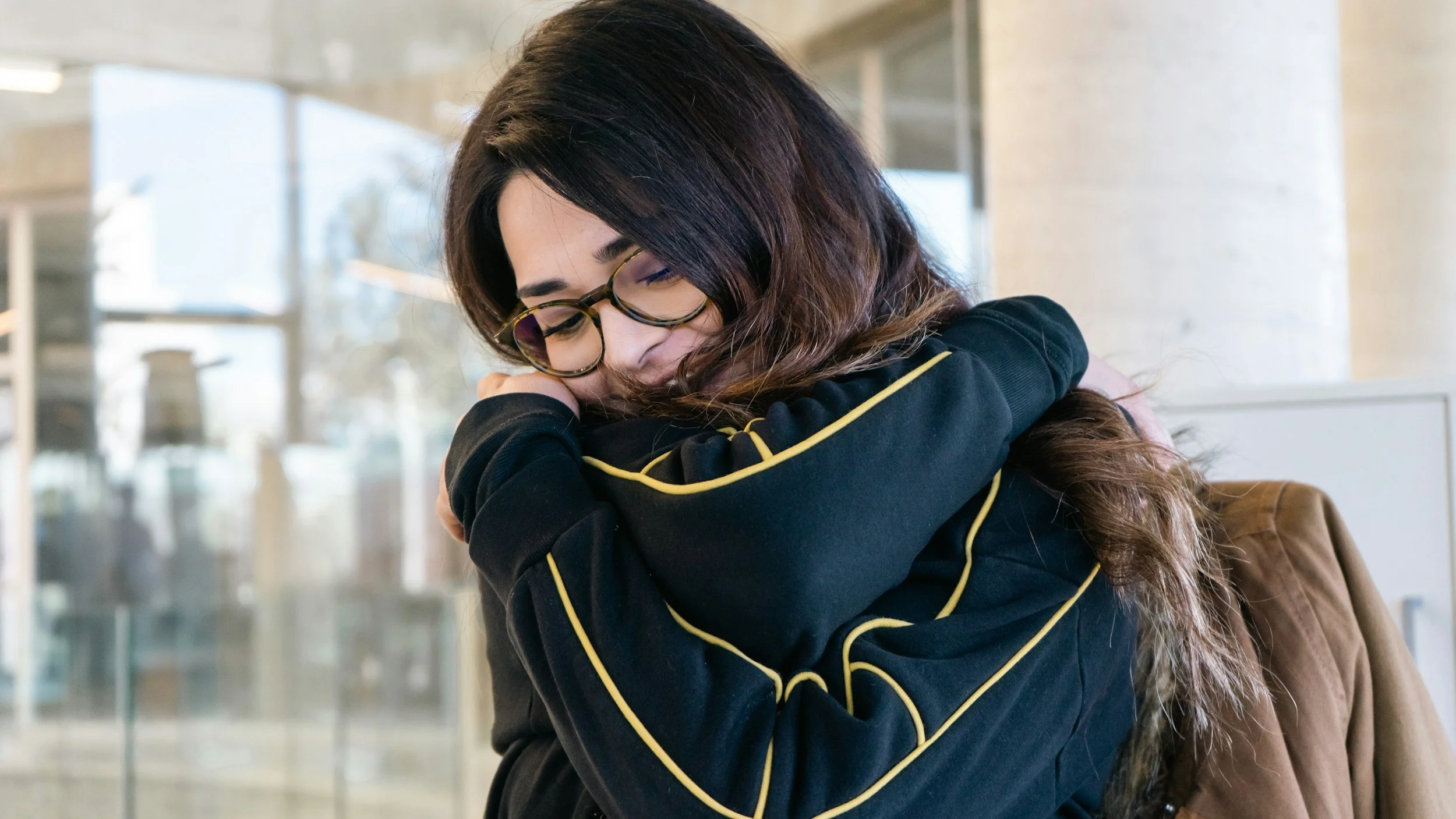
1) Lie on your back or side in a comfortable position and cross your arms over your chest and gently hold or rest your hands on your shoulders or upper arms and hug yourself.
2) Soften your gaze, or close your eyes.
3) Simply be in this position and invoke sensations of support, love, and the healing power of felt contact, embrace and bodily support.
4) Allow emotions and sensations to arise without judgement.
5) Ground after the practice: wiggle fingers and toes, slowly reorient back into the room by looking around the space, meet bodily needs, rest.
Embrace Tips
• EASE INTO THE PRACTICE: Begin with 1-5 minutes and slowly increase over time.
• USE PILLOWS OR BLANKETS: If physically unable to hold a self embrace, create a sensation of embrace with pillows and blankets tucked up against you supporting the body.
• EYE POSITION: More emotions can arise with closed eyes. Use a softened gaze, as needed.
•TAKE BREAKS: If overwhelmed, pause and turn your gaze out a window or towards a beloved pet, person, or object as needed
• NO BLAME, NO SHAME: Let emotions and sensations arise without judgement.
• BUILD IN REST: This practice can release emotions. Create intentional rest afterward.
• SEEK SUPPORT: Connect with a safe support system to process this experience, or ask a safe person to be present for this practice.
• MODIFICATIONS: Consider gentle rocking or light tapping of the fingers on arms/ shoulders.
Add a mantra of your liking: "I am held," "I am supported," "I am loved,""I am here."
Gratitudes
1) Lie in bed in a comfortable position with the weight of your body supported by pillows and blankets.
2) Soften your gaze, or close your eyes.
3) Begin to bring awareness to what you are grateful for. Internally or verbally name them, creating intentional space between each gratitude to allow the body and mind to marinate in positive sensation.
4) Allow emotions and sensations to arise without judgement.
5) Ground after the practice: wiggle fingers and toes, slowly reorient back into the room by looking around the space, meet bodily needs, rest.
Gratitude Tips
• NO SHAME, NO BLAME: Be gentle with yourself. It is easy to lose touch with the little joys, celebrations, and things we are grateful for when constantly exhausted and in pain. Allow space to grieve this loss and create a non-judgmental intention to reclaim it.
•EASE INTO IT: This practice is equally powerful choosing one thing you are grateful for, if invoking multiple things feels overwhelming.
• INCLUDE SELF: Don't forget to include yourself, your strengths and all you've overcome.
• NAVIGATING ISOLATION: In circumstances of limited community support this practice can feel more difficult. Lean into who and what you do have- consider companion animals, your remote collective community with shared experience and inner knowing, and disabled activists uplifting and fighting for you.
• DEEPENING: With limited energy and health we often lose gratitude for our body. Consider tailoring gratitude for parts of the body that show up for you: "I am grateful for my lungs that breathe for me," "I am grateful for my stomach and mouth that nourish me"...
Breath, embrace, and getting in touch with the simple things we are grateful for can be highly impactful accessible practices.
